
What a year it has been in the animal welfare space! From urging the provincial government to increase the availability and affordability of pet-friendly housing, to pushing for a nation-wide ban on fur farming (after a successful ban on mink farming in B.C.), we couldn’t have done it without the unwavering support of passionate animal lovers like yourself. You jumped at the chance to reach out to your representatives, shared the issues you believe in with friends and family, and generously donated to keep these efforts going.
A highlight this year was the BC SPCA Exotic Cats Aren’t Pets campaign, which made waves throughout our community, garnering both media attention and public support. After decades of campaigning, we’re at a crucial point in advocating for the welfare of these exotic cats. In this article, we’ll review what we’ve achieved so far and what will happen next.
Decades-long battle
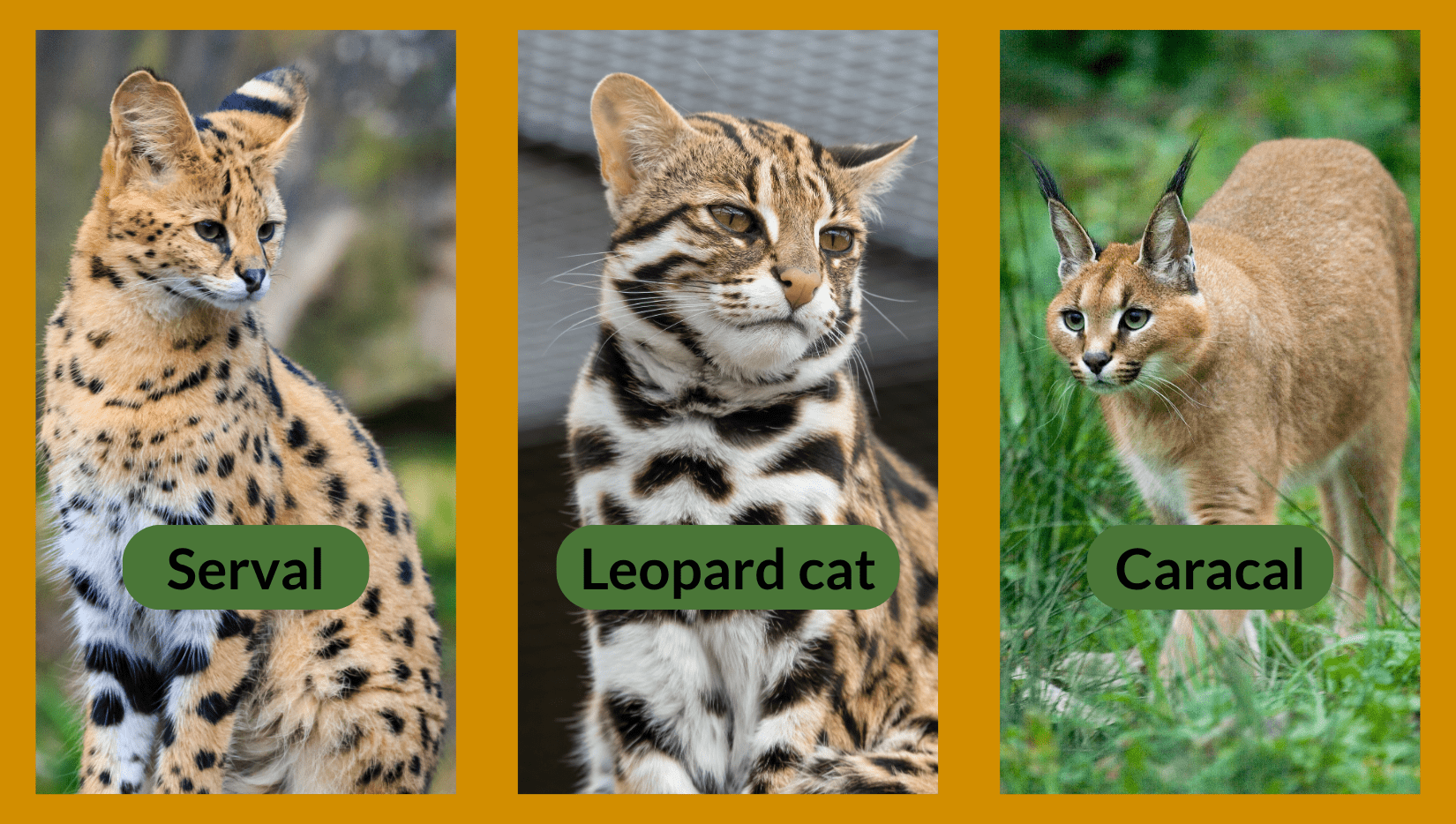
The BC SPCA started raising concerns about keeping exotic cats as pets over two decades ago. Increasing reports of exotic cats kept in small cages, being walked on leash near schoolgrounds and taken to birthday parties were all alarming. However, it was the tragic loss of human life in 2007 by a pet tiger in the B.C. interior that finally caught the government’s attention. In 2009, an amendment came into force that created the Controlled Alien Species (CAS) Regulation under the provincial Wildlife Act, phasing out all private ownership and breeding of large exotic cats. Although this was a major success, small and medium-sized exotic cats were not included on the list, leaving much work to be done to protect these animals being bred in captivity. In 2019, the BC SPCA seized 13 servals (wild cats native to Africa) living in horrific conditions from a breeder near Kamloops. After significant medical care, these cats were successfully placed in sanctuaries in the U.S., as no accredited sanctuaries for exotic cats exist in Canada.
Sadly, there is no way to know how many exotic cat breeders there are in the province because the import, keeping, breeding and sale of these small and medium exotic cats remains unregulated. Numerous serval escapes have been reported across B.C.; many were never found, while others were hit by cars. In 2022, two servals escaped in Nanaimo and claimed the life of a beloved house cat and several domestic ducks before being recaptured. Servals and other exotic cats were not included in the original provincial regulation list because they were not perceived to be a threat to public safety, yet their suffering and their ability to harm other animals and people became increasingly clear. This gap in regulation has prompted ongoing behind-the-scenes advocacy and public education efforts in recent years, including a major campaign in 2019 with more than 8,000 BC SPCA supporters calling for change. Although the pandemic slowed government engagement on the issue, BC SPCA animal welfare experts have remained active and persistent alongside grassroots efforts by individuals who reported the concerning ownership of these animals in captivity.
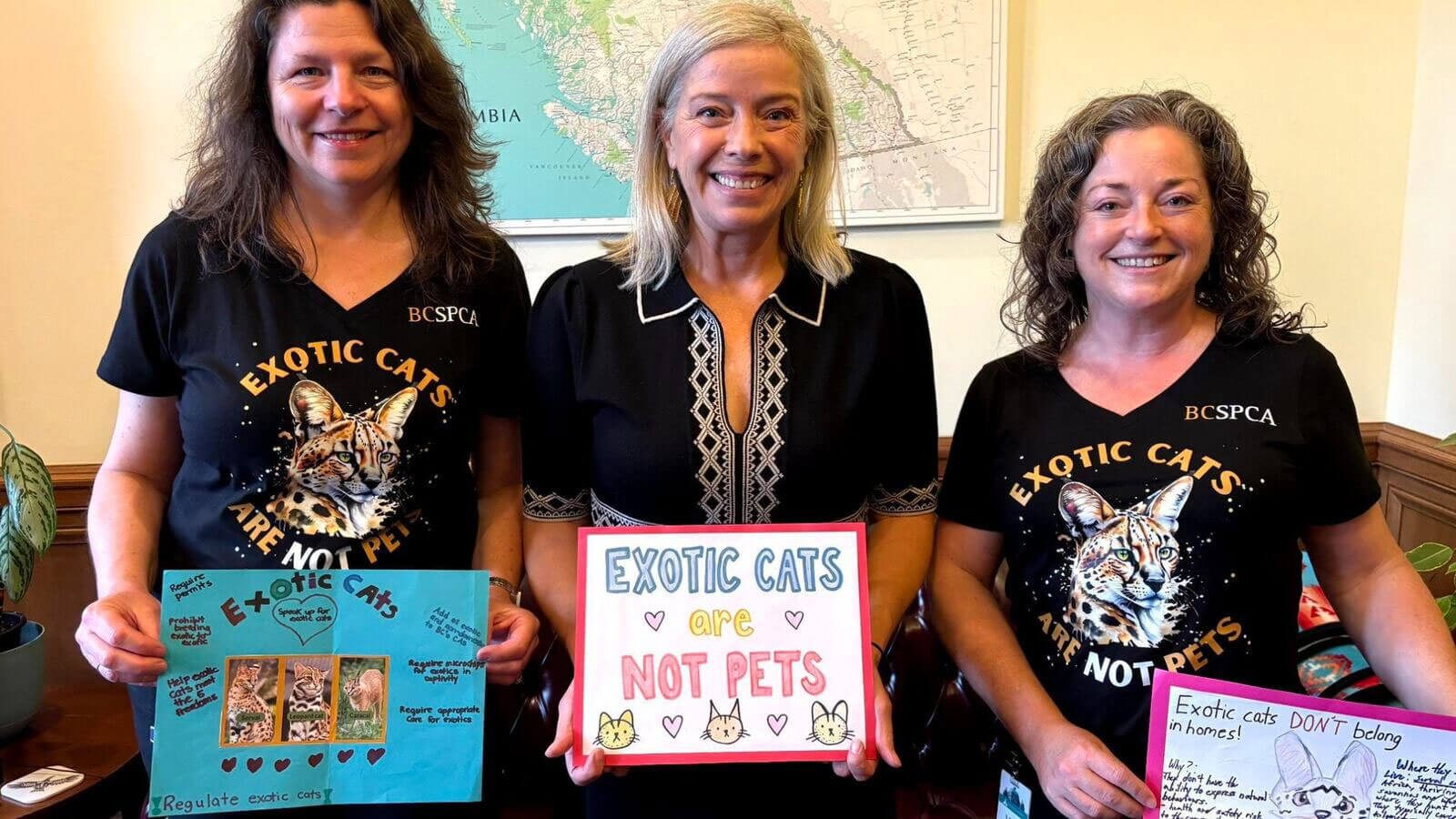
In 2025, noting renewed government interest in this issue, the BC SPCA called for ALL non-native, non-domestic cats to be included alongside the approximately 1,200 other animals on the CAS list. Again, the voices of thousands of animal lovers across the province spoke up. This change would ensure that the provincial government bans the importation, keeping, breeding and selling of servals, caracals, ocelots, and leopard cats, among other exotic cats. BC SPCA youth summer campers wrote letters and made posters advocating for the change to protect exotic cats. These were then hand–delivered to the Minister of Water, Land and Resource Stewardship, the Honourable Randene Neil. Local volunteers, advocates, and partners helped amplify the issue. We are closer than ever to reaching this monumental change for animal welfare!
Why a ban matters
Three very important core considerations are behind this cause:
Animal welfare
- Exotic cats are wild animals (even when bred in captivity) and they suffer when they cannot live their instinctually wild lives. When exotic cats are not free to express their natural behaviours, they may become depressed, destructive or resort to self-mutilation. Most people do not have the resources or knowledge to meet exotic cats’ complex physical, behavioural and psychological requirements.
- Meeting their nutritional needs is also challenging, and inappropriate diets can lead to painful and debilitating diseases. Many vets are unwilling or untrained to treat exotic cats as handling these animals can be dangerous, so illnesses often go undetected until severe.
Public health and safety
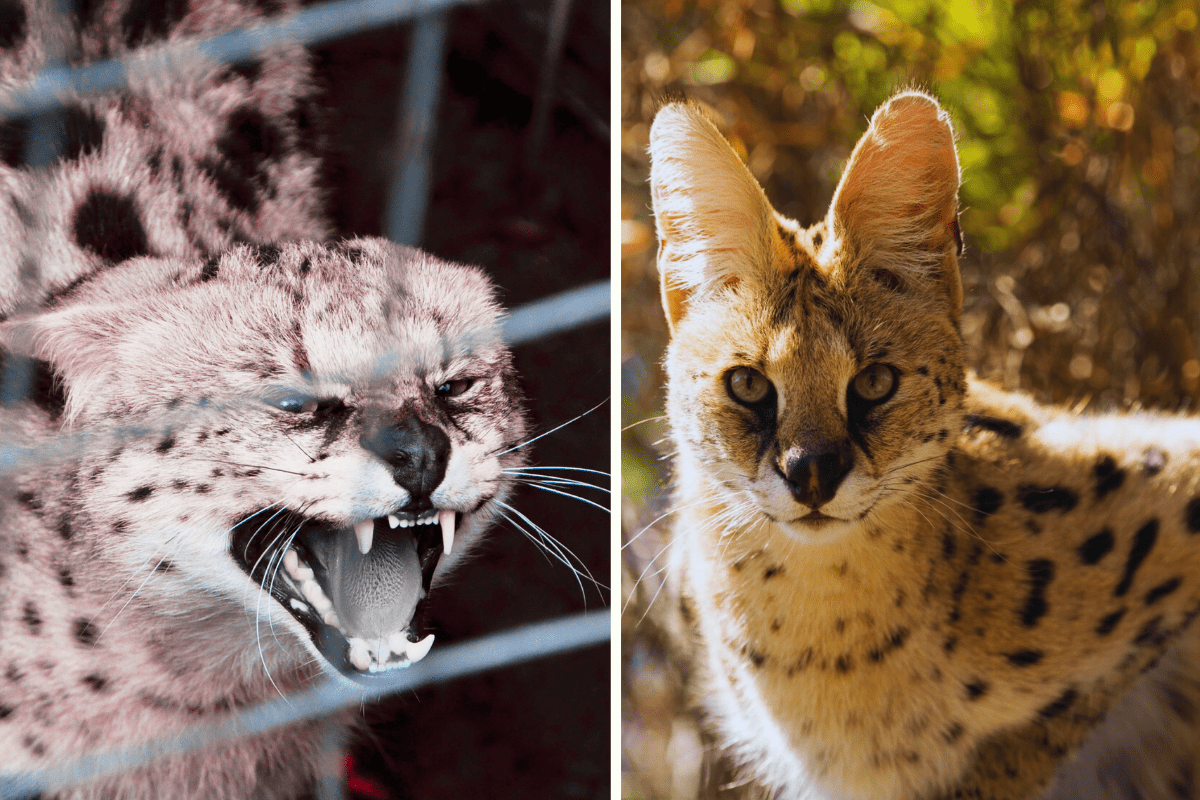
- As we’ve been reminded so many times before by unfortunate events, exotic cats frequently escape from their owners and breeders. When they’re loose, they are a risk to members of the community, as well as other domestic and wild animals.
- Exotic cats may bond with their owners, but their territorial and defensive instincts mean they can act unpredictably, particularly if they feel threatened, stressed or frustrated.
- Both servals and caracals can weigh up to 40 pounds and have a bite force three times greater than a domestic cat, and equivalent to some larger dog breeds.
Environmental and conservation impacts
- Removing exotic cats from the wild for the pet trade can damage their natural habitats and threaten the species’ population and survival.
- If exotic cats are abandoned or escape from owners or breeders, they may prey on native B.C. wildlife.
What happens next?
After hearing from so many in support of the proposed changes to the CAS list, the Ministry of Water, Land and Resource Stewardship has completed their stakeholder engagement; now a final decision could come early in 2026! This means that our holiday wish may come true very soon:
- Ban the import, breeding and sale of ALL exotic cats kept as pets;
- Licensing of exotic cats currently kept as pets;
- Minimum care standards for exotic cats currently in captivity as pets.
Be the first to celebrate!
If this issue is close to your heart and you want to stay up to date, plus the opportunity to add your voice, make sure to fill out the form below!
Learn about other ongoing efforts the BC SPCA is currently advocating for, here.
Subscribe to Action Alerts
Want to be the first to know about actions you can take on behalf of animals? Subscribe to receive Action Alerts.
The BC SPCA uses your personal information to update you on our work for animals as well as for advertising and analytics purposes. More information on uses and how to opt-out can be found in our Privacy Policy.