
February is dog training education month! This month is dedicated to highlighting the importance of positive reinforcement training also known as reward-based training for you, your dog and your bond! To celebrate dog training education month, we reached out to Allison Painchaud, an AnimalKind accredited trainer, who shares her tips on training adult dogs.
What is the biggest difference between training a puppy vs. an adult dog?
Although patience is required to teach both puppies and adult dogs what is expected of them, there is generally slower progress with an adult dog, and guardians should be prepared for that. There is no quick fix for behaviours like pulling on a leash or jumping on people that have been established over time. However, with consistent, reward-based training techniques these behaviours can be changed. Puppies, on the other hand, if training is started early enough, don’t have bad habits that need to be corrected and can be more easily taught good habits.
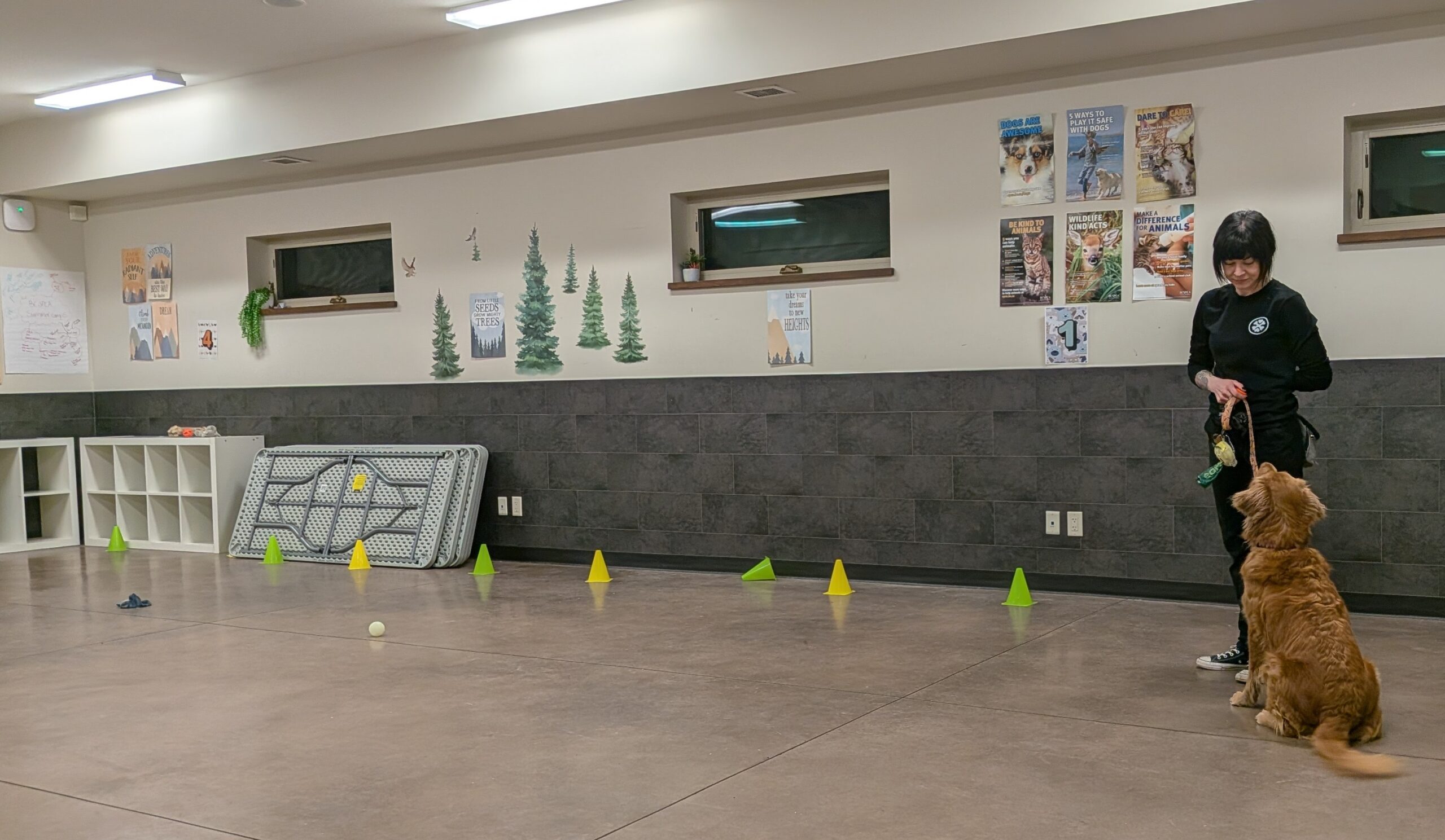
Allison’s top five tips for training an adult dog:
Always use reward-based training!
It is never too late to teach an old dog new tricks or help your dog learn some new habits! Reward-based training is so powerful: it not only uses evidence-based techniques to teach your dog new habits and skills, but it also truly improves communication between us and our canine companions.
Use real life rewards
Positive reinforcement does not just come in the form of food or toys. Rewards and reinforcement can come from your dog’s environment like sniffing that popular spot on the walk, attention and head scratches, or playtime with another dog. Anything your dog enjoys can be reinforcement for desired behaviour. Everybody wins!
Manage the environment
We can prevent unwanted behaviour from being rehearsed by managing your dog’s environment. For example, baby gates to prevent jumping on people visiting our home or blinds or window film to prevent barking at someone approaching the front door. This sets your dog up for success. If we set them up to offer behaviours we want to see, then we can reward them for doing so! By providing more opportunities for rewards, the good starts to occur more often, and the bad tends to extinguish over time.
Minimize distractions
Just because your dog is considered an adult by age, does not mean they are in graduate school for certain behaviours. Everything that dogs learn can be broken down in skill levels from Kindergarten to PhD, for example, but not by age necessarily. It is all about practice and consistency. We have to consider not only the amount of practice they have had with trained behaviours, but what skill level they are at in comparison to the level of distraction around them. Regardless of age, we want to always start training in the least distracting setting possible, and then gradually add in real life distractions. This helps your dog focus on us, sets them up for success and makes the training process less stressful for them.
Capture good behaviour when it is offered
It happens often. We aren’t paying attention when our dogs are well behaved. If your dog is sitting quietly on the sofa, we may admire them from afar, but how often do we praise them for doing so? If they offer a sit without jumping, and it goes unnoticed, they jump in a second attempt for attention. If your dog offers a behaviour you want to see, even if you didn’t ask for it, reward it and you will reinforce it, and see more of it!
What is the one thing guardians often underestimate in terms of its impact on training?
I think we often underestimate how distractions really affect our dog’s ability to respond to us. You cannot ask or expect your dog to “come” away from another dog they are playing with at the dog park if they don’t yet “come” to us in the backyard. We cannot expect a dog to “come” to us in the backyard, if they won’t respond inside the living room. Get success at the lowest distraction level possible and then build in real life distractions.
When people say their dog is “stubborn,” it’s not that their dog is purposely not listening, it’s often that they need more practice at one level before they are exposed to more distractions.
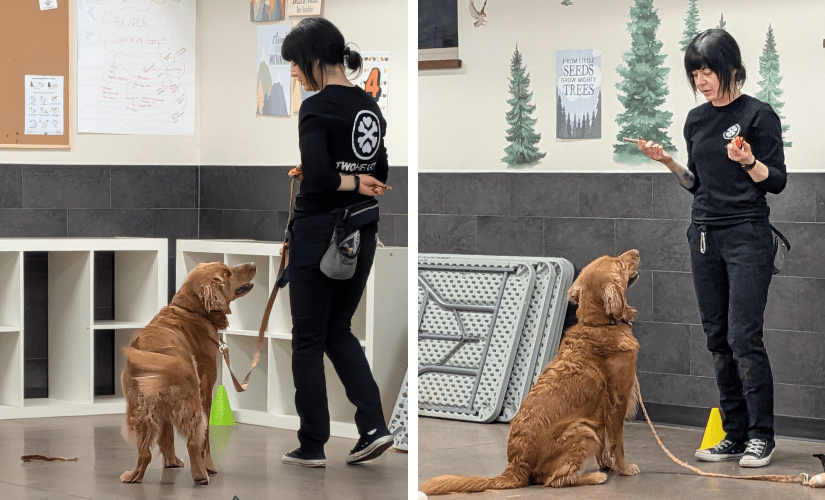
Allison Painchaud is a BC SPCA AnimalKind accredited dog trainer and the owner of Two Hearts Training based in Kelowna. She offers adult and puppy dog training classes and other training services. For more information on Allison please visit twoheartstraining.ca
Interested in learning more about positive reinforcement training and AnimalKind? Click here.