
Good planning can make all the difference in the event of a disaster. Don’t forget to include your pets in the plan. Make your emergency exit more efficient with these tips. Download our evacuation checklist below.

Prepare & Prep
- Emergency Sticker: Put a sticker on each entry of your home so first responders know what animals are home.
- Pack a ‘to go’ bag: Having a ‘to go’ bag ready is essential. Include photographs of your pet, their microchip information, medications and medical records. Consider digitizing your documents too!
- Pet insurance: Update your pet’s health insurance account such as your contact information. Keep a copy of this info in your ‘to go’ bag. If you don’t have pet insurance yet, consider signing up with Petsecure Pet Insurance.
- Collar, tag and permanent ID: Keep a collar and tag on your pet with your home phone number and address. But pets can slip out of their collars, so book a vet visit to give your pet a permanent ID, like a microchip or tattoo.
- Register your pet: In case you’re separated during an emergency, make sure your pet and their identification are registered with the BC Pet Registry (microchip, tattoo or licence). This step is crucial for a quick and safe return. Remember to keep your contact details updated on bcpetregistry.ca
- Practice Evacuation Procedures: Familiarizing your pet with evacuation procedures can reduce their stress. Additional training such as an emergency recall for your dog can be helpful.
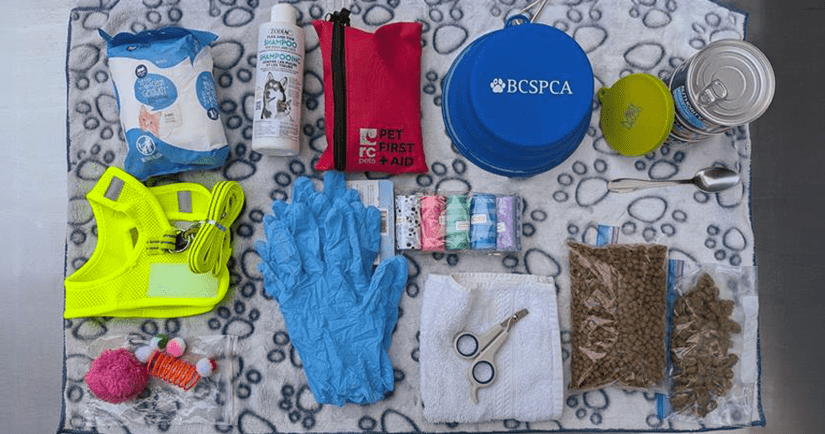
Emergency kit checklist
- Food and treats for two to four weeks:
- Include dishes – collapsible are great.
- Manual can opener, spoon/scoop.
- Water:
- Dogs: 70 ml for each kg/day for average dog
- Cats: 1 litre/day for average cat.
- Pet first aid kit: Include exam gloves, small flashlight, blunt tip scissors, gauze pads & rolls, rubbing alcohol, antibiotic ointment, sterile rinse solution, cold pack, bandage materials, thermometer and lubricating jelly, emergency thermal blanket. Have the ability and knowledge to provide emergency help for your pet.
- Medications and medical records: Include medications for two to four weeks, vet contact info, pet photos with written descriptions of your pets and store them in a Ziploc bag.
- Copy of your pet’s current vaccination history.
- Any special medications and instructions.
- Dogs: Waste bags, disinfectant for pet mess clean-up, paper towels, leashes (6 foot and 15-20 foot), harness, muzzles.
- Cats: Litter box, litter, scoop, garbage bags, consider having a cat harness and leash.
- Small animals: Bedding, extra water bottle, hiding box, extra hay.
- Sturdy carriers: One for each pet and extra bedding. Consider bringing a larger expandable ‘tent’ carrier for cats or an exercise pen for dogs. This can make them a bit more comfortable if you’re going to be out of your home for an extended period. Having spaces for your cat or dog to hide or play in will provide some much-needed comfort and safety.
- Shade: Without a carrier, having something to provide shade if outdoors.
- Toys to help entertain and lower stress (dogs: Kong, ball, treat ball; cats: feather wand, catnip toys).
- Comfort: Bring some of the things that will allow them to feel comfortable. This could be a toy or a brush from home, or their favourite treats help to keep them safe and happy.
- Extras: Towels/blankets, paper towels, rope, duct tape, Sharpie marker, snap ties.
- Label all containers with pet names and your contact information. Things can go missing in an emergency. Pack as many items as possible in ready-to-go bins or backpacks. Mark bins with pet names and your contact information. While in storage, change out your pet food and water every three months. Replace medications as advised by your veterinarian.
- If you have animals who cannot be moved, like aquarium fish or farm animals, create a sign. Include a description of the animals, your name and contact information. Keep the sign and some tape together with it so it is ready to post on your door to alert rescue teams.
- List of BC SPCA Centres in your area: Include list of BC SPCA centres nearest you and in surrounding areas. Write down BC SPCA’s Animal Helpline 1-855-622-7722 in case you need assistance such as emergency boarding.
Want to provide supplies? Contact each shelter directly if you have pet supplies to drop off or donate below: