
All dogs are unique and wonderful in their own way, but some have an extra special “star quality”. This December, audiences at Gateway Theatre in Richmond will be treated to canine star-power in a new production of Annie, running from December 11 to January 3.
While the beloved musical is known for its catchy songs and story, this production has an extra sweet component: three talented dogs, trained with humane methods, who will take turns playing Sandy, Annie’s loyal companion.
To make it happen, the theatre partnered with BC SPCA AnimalKind accredited trainer Rebecca Jennings, owner and trainer at Pooch Positive. With her humane approach, Jennings ensures that the dog actors are not only stage-ready but also happy and comfortable, with their welfare a priority throughout the production.
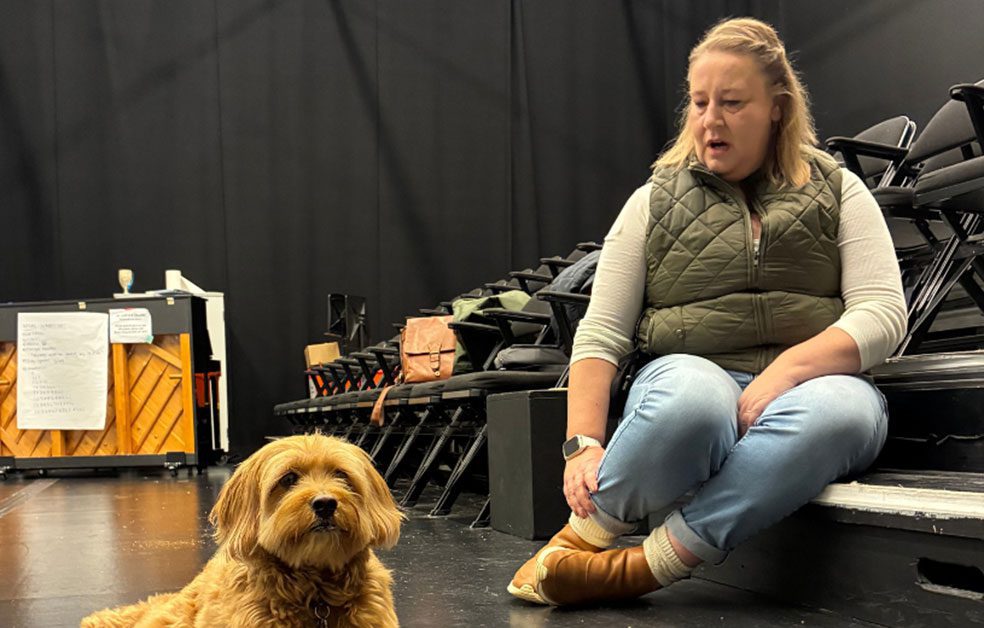
Three dogs, one Sandy
Each dog playing Sandy brings a unique personality to the stage, but all share the qualities needed for the role: energy, confidence, and a strong bond with humans.
Jennings describes the trio of performers with affection. Poco, a six-year-old Jack Russell Terrier and Chihuahua mix, is an adorable rescue dog who has flourished with his amazing family. “He is beautifully bonded to that family,” Jennings says. Neko, a five-year-old, 20-pound mix of Cocker Spaniel and Miniature Poodle, is a trick training expert with competition experience, bringing precision and charm to the role. And last, but not least, sweet Mylo, a six-year-old Cavapoo (a mix of a Cavalier King Charles Spaniel and a Poodle) who is very social and “just loves everyone and everything.”
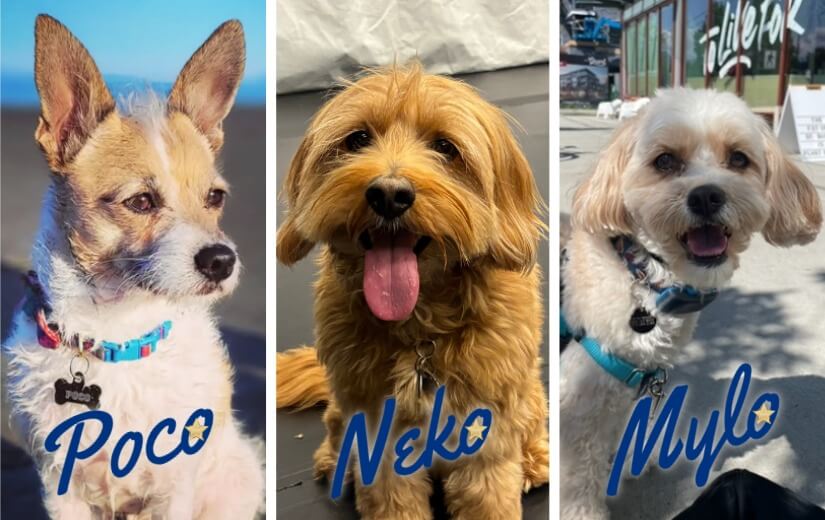
The audition process
The first step in each dog’s ascent to the stage was the audition. “When the audition process happened, we were looking for dogs who were energetic, had a really great relationship with humans, and were, body language-wise, happy to be on the stage,” Jennings explains.
The audition was led by director Josh Epstein, who asked Jennings to take on an advisory role to help select the best canine candidates.
Each audition was 15 minutes long, during which dogs had the stage to showcase their skill and personalities. Among the many dogs who auditioned, Poco, Neko and Mylo stood out with their charm and their strong bonds with humans, which are critical to ensuring actors and dogs are comfortable working together. The decision was unanimous, “We all kind of looked at each other and went ‘yeah’ on each of these dogs”, says Jennings.
Dog welfare takes centre stage
From the start, Gateway Theatre has prioritized the well-being of the dog actors, and working with an AnimalKind-accredited dog trainer has helped them achieve that.
For Jennings, the opportunity to collaborate and bring her knowledge of humane training and dog body language to the stage was too exciting to refuse.
Working closely with Epstein, Jennings tailored the training to the play’s needs, always keeping dog welfare at the centre stage. She focused on noise desensitization and stage movement using positive reinforcement to keep the dogs comfortable and focused. The dogs already had strong skills, but Jennings ensures they are relaxed in the unique environment of live theatre.
To achieve that, Jennings and the production team ensure that Neko, Poco and Mylo have rotating performances to ensure each gets rest and avoids stress. They also designed Annie’s costume with pockets for treats, so that every cue is rewarded, and all interactions are positive.
Even complex scenes, like Sandy searching for Annie while evading the “dog catcher,” are made simple, fun and consistent through target training: each dog uses a yellow circle target placed on stage. Twice during the play, Sandy enters, hits the target, and exits, making the routine predictable and stress-free, all while using reward-based training methods.
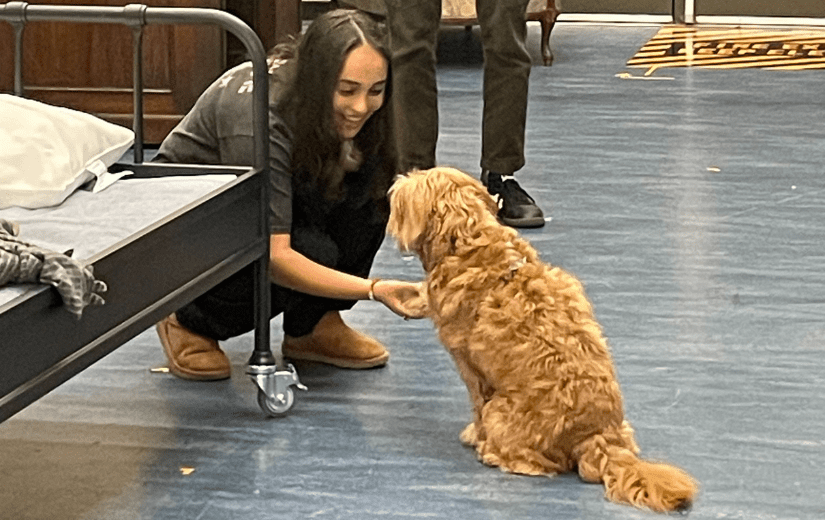
Why reward-based training matters
Evidence shows that humane, reward-based training is the most effective and least harmful method for training dogs while also fostering a relationship based on trust between dogs and humans.
Training using rewards and positive reinforcement matters because dogs not only learn better but are also happier. For Mylo, Poco, and Neko, it means their training for the role of Sandy is humane, compassionate, and rooted in respect.
The BC SPCA’s AnimalKind program accredits trainers like Jennings, who are committed to using only reward-based training methods. This accreditation is why the theatre reached out to Jennings for her assistance in the production of Annie.
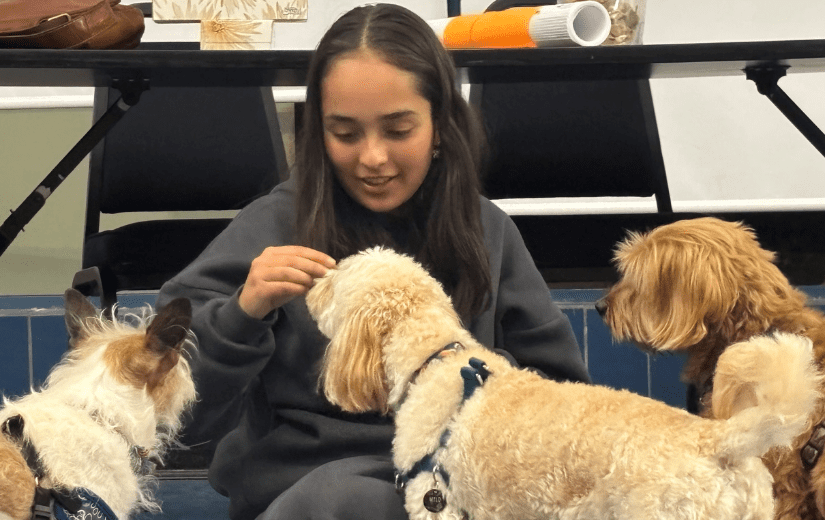
A production with heart
The collaboration between Gateway Theatre, Jennings, and the dogs’ families has been a labour of love.
“There has been so much work into this production, and the respect Gateway Theatre has given to the dogs, to actors, is just beautiful,” Jennings says with a smile.
With three talented dogs, a compassionate trainer, and a theatre dedicated to kindness, Annie promises to be more than a musical: it’s a celebration of the bond between humans and animals, and proof that humane, compassionate dog training belongs in the spotlight.
Learn more
- Catch Annie at Gateway Theatre in Richmond from December 11 to January 3.
- Check out AnimalKind and the directory of dog trainers
- Get to know Becks at Pooch Positive